- Thanksgiving
- Table talk
- Family gatherings
Thanksgiving conversation starters for the table, course by course
A good question for every part of the day, from the first knock on the door to the last plate dried. Plus the questions worth leaving out, and what to ask instead.
 By JPott Studios
About an 8 minute read
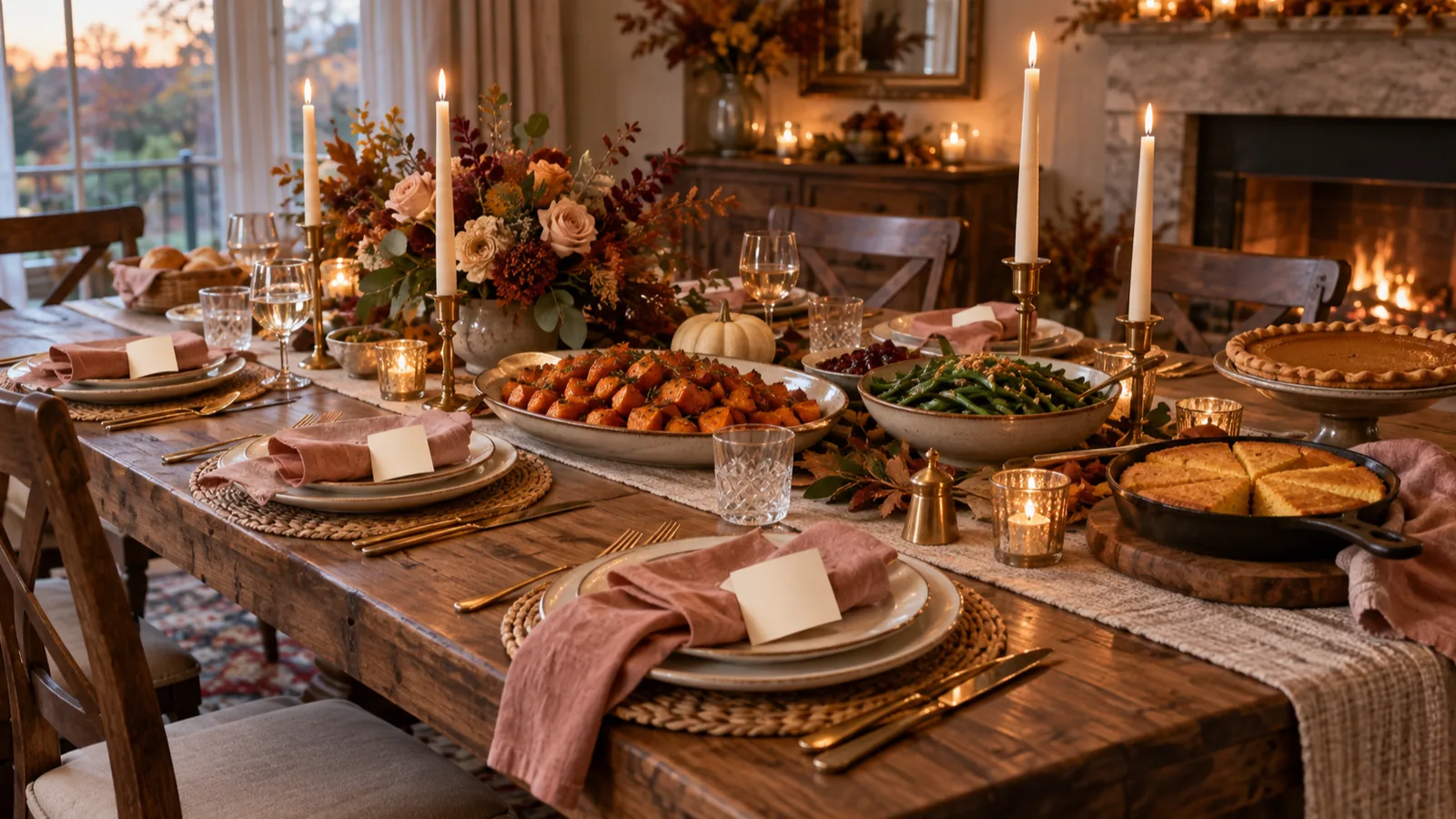
The best Thanksgiving conversation starters are specific, easy to answer out loud and matched to the moment: light ones while people arrive, story questions over the main course, and slower, deeper ones once the pie comes out. Something like "What dish tastes most like your childhood?" will get a whole table talking in a way that "what are you thankful for?" rarely does.
Thanksgiving falls on Thursday 26 November in 2026. Below is a plan for the whole day, one part at a time, with a handful of questions for each and a few you might want to leave out altogether.
A plan for the whole meal, not just one question
A holiday meal isn't one conversation. It's six or seven, each with a different mood. People arriving are distracted and busy. The first minutes at the table are a bit formal. By dessert, everyone is full and slower, and some of the best talk happens at the sink afterwards.
So instead of a single list, think of the day in parts, and have one or two questions ready for each. You don't need to use them all. Often one good question at the right moment is enough to carry the table for half an hour.
The day, part by part
A different kind of question for each moment.
- The doorbellEasy and lightNothing anyone has to think hard about.
- Sitting downWarm, not heavyA kinder way into thankfulness.
- The main courseStoriesFood memories and family history.
- Before dessertA quick gameFor when energy dips and plates are cleared.
- Pie and coffeeSlower and deeperThe year, and what comes next.
- The washing upSide by sideFor quieter people and one-to-one talk.
Questions for while people arrive
Coats are coming off, someone's looking for a serving spoon, and the oven timer is going. Keep these short and easy, the kind you can ask while taking a dish from someone's hands.
- What's the dish you've been looking forward to most today?
- How was the journey? What was the best bit of it?
- What's something you've been enjoying lately, a show, a book, a song?
- If you were in charge of the menu next year, what would you add?
- What's the best thing you've eaten since we last saw each other?
If you're hosting, hand the first guests a job along with the question. People talk more easily with their hands busy, and it takes the pressure off you.
When everyone first sits down
This is where many families ask "what are you thankful for?", and it often lands with a thud. The question is too big. People reach for the safe answers, "family, health, this food", and the moment passes. Make it smaller and more specific, and let people answer in any order.
- Who made your year a little easier, and what did they do?
- What went better this year than you expected?
- What's something small you'd happily do again every week?
- Who at this table would you call if your car broke down at midnight?
- What's one thing you learned this year, big or small?
Go first yourself, and keep your answer short and honest. It shows everyone what kind of answer you mean, and it makes it safe for others to say something small.
Story questions over the main course
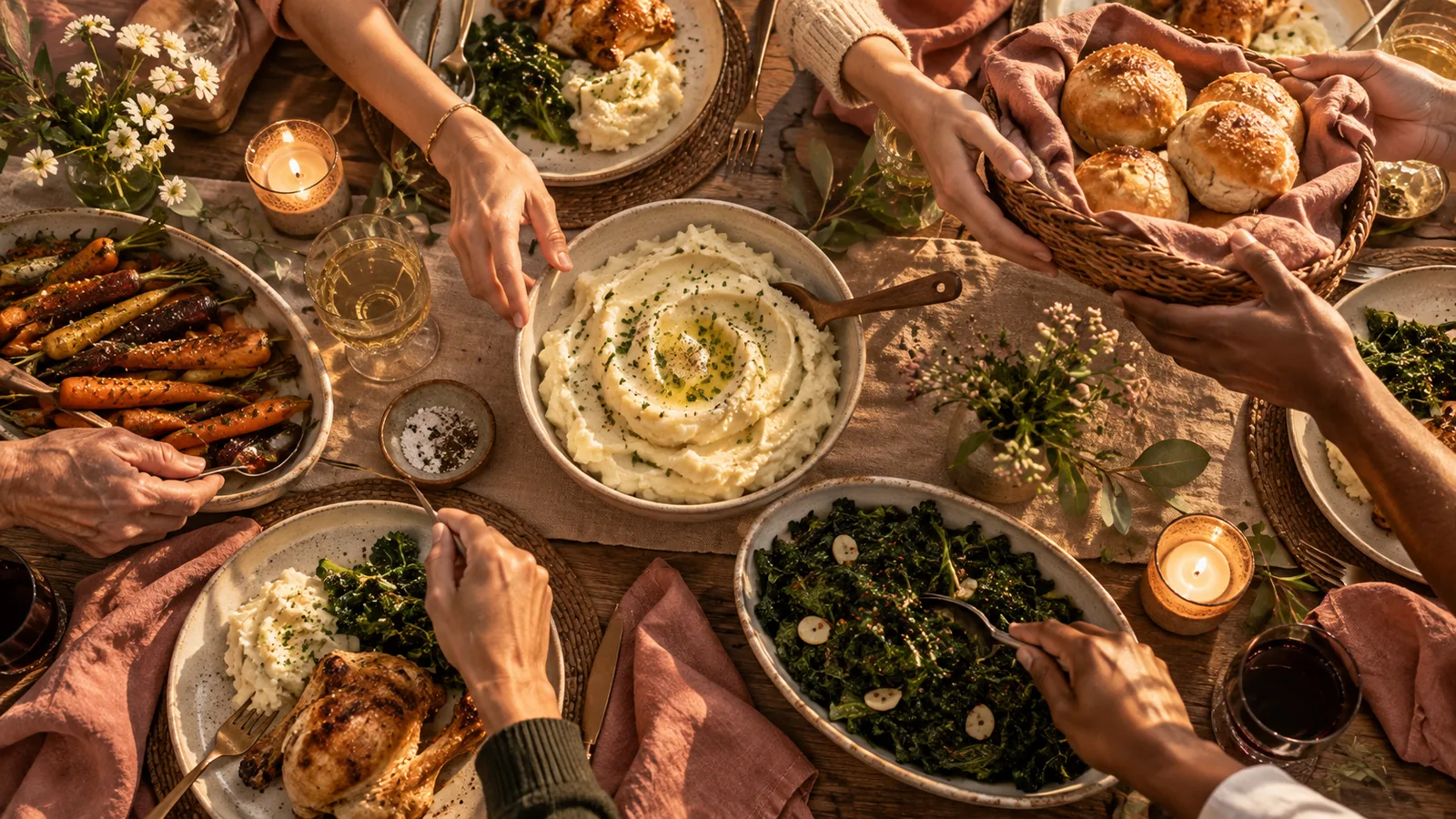
Plates are full, and people are settled for a while. This is the best moment for stories, especially from the older people at the table. Food is a lovely way in, because everyone has a memory attached to something on their plate.
- What dish tastes most like your childhood?
- What's the most memorable holiday meal you've ever had, good or disastrous?
- Who taught you to cook, or who do you wish had?
- What did a big family meal look like when you were young?
- What's a family recipe we should write down before it's lost?
- What's the funniest thing that's ever happened at one of our family dinners?
When a story starts, follow it. A simple "and then what happened?" is worth more than the next question on your list. If there are grandparents at the table, our questions to ask your grandparents go deeper into their memories.
A quick game for the lull before dessert
The plates are cleared, someone's making coffee, and the energy drops. It's the moment a phone comes out, or the television goes on. A short game keeps everyone at the table a little longer.
The napkin question game
Hand everyone a slip of paper or a paper napkin and a pen. Each person writes one question they'd like anyone at the table to answer. Fold them, drop them into an empty bowl, and take turns pulling one out. Whoever pulls it answers first, then passes the bowl on. Children love this, and their questions are usually the best.
Quick picks for all ages
- Pie or cake, and which kind?
- Would you rather cook the whole meal or wash up after it?
- If the turkey could talk, what would it say about us?
- Would you rather have Thanksgiving on a beach or in the snow?
- Which leftover is the best one, the next day?
Quick picks like these are a family cousin of would you rather questions. Always ask "why?" afterwards. The reason is where the laughing starts.
Slower questions over pie and coffee
By now everyone is full, warm and in no hurry. The table often shrinks to the people who want to stay and talk. These questions are a little deeper, but still gentle, and they suit the end of a year.
- What's one thing you're proud of from this year that nobody here knows about?
- What would you like more of next year?
- What's a tradition from this family you hope never changes?
- If you could spend one day with anyone in our family history, who would it be?
- What's something you've changed your mind about as you've got older?
- Where do you think we'll all be for this meal in ten years?
These work best when nobody feels put on the spot. Throw one into the middle of the table rather than aiming it at one person, and let whoever wants to answer go first.
From JPott Studios
One calm email a month
One useful tip, one free printable or tool, and a short note from our apps. Join and get the free welcome pack: printable trackers, a packing list maker and more.
Questions for the washing up and the walk
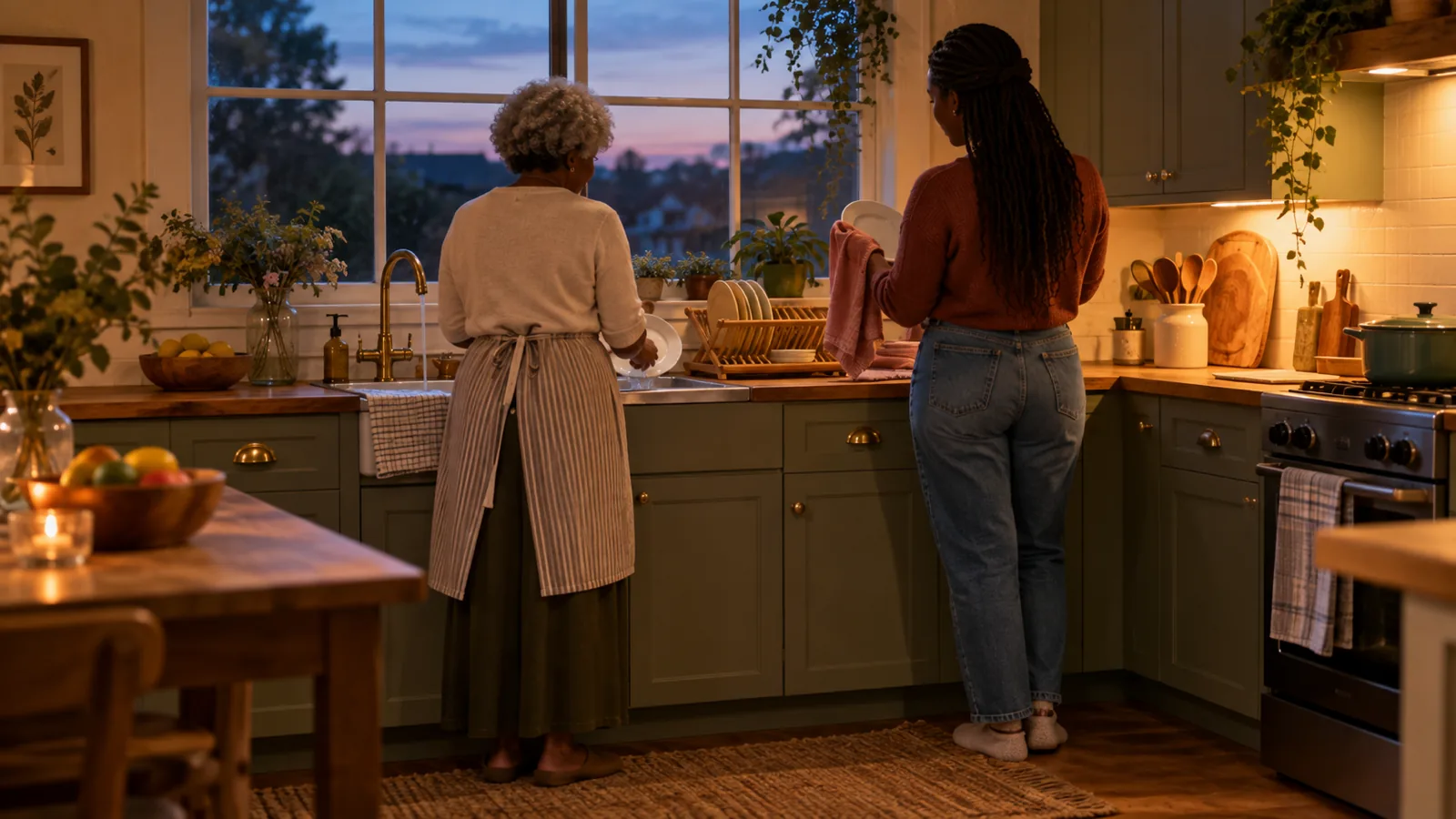
Some of the best holiday conversations happen side by side: at the sink, carrying chairs, or on a slow walk after the meal. Nobody has to look at anyone, which makes it easier for quieter people, and for teenagers in particular, to say something real.
- What was your favourite moment of today?
- How are you actually doing? Not the table answer.
- Is there anything coming up in December you're looking forward to, or dreading?
- What should we do differently next year?
Offering to dry while someone else washes is one of the oldest ways to get a proper chat with a relative you rarely see alone. Take it.
Questions to swap out, and what to ask instead
Some questions reliably make a holiday table tense. They're usually well meant, but they put one person in the spotlight about something they may not want to discuss in front of everyone. Here are some easy swaps.
Instead of this, try this
Kinder questions that still show you're interested.
| Instead of | Try |
|---|---|
| So, are you seeing anyone? | What's been keeping you busy lately? |
| When are you having children? | What are you looking forward to next year? |
| Have you found a job yet? | What's something you've enjoyed learning recently? |
| Have you put on weight? | Nothing at all. Bodies are not table talk. |
| Who did you vote for? | What's a small thing that made your year better? |
You can't control what everyone else asks, of course. But having a friendly question ready means you can gently turn the table when it drifts somewhere uncomfortable. "Anyway, Auntie, who taught you to make this?" is a very useful sentence.
Keeping a mixed table kind
A Thanksgiving table can hold four generations, old tensions and someone's new partner meeting everyone for the first time. A few simple habits keep the questions a pleasure rather than a test.
- Pass is always allowed, with no comment. Say so out loud before you start.
- Answer your own questions first, briefly and honestly.
- Include the newest person gently, with easy questions rather than a grilling.
- Let the children ask too. Their questions to grandparents are often the most memorable of the day.
- If someone is missing this year, it's fine to name them. "What would Grandad have said about this pie?" can bring warmth as well as tears.
Holidays can be hard as well as happy. If your table carries grief, distance or an argument that never quite ends, it's fine to keep the questions light, or to step outside for a breather. You don't have to fix anything over one meal.
For the rest of the year, our questions for family dinners keep ordinary weeknight meals interesting, and our free question of the day gives you a fresh one whenever you need it. If the family is spread across towns or countries, Our Little Thing has a Family option with one question a day that you each answer on your own, then reveal together, so the conversation can carry on long after everyone has gone home.
Questions people ask
What are good Thanksgiving conversation starters?
Specific questions that everyone can answer out loud work best, such as "What dish tastes most like your childhood?" or "What is a small thing that went right for you this year?" Choose lighter ones early in the day and save story questions for the main course.
What can we talk about at Thanksgiving instead of politics?
Food memories, family stories, the best parts of the year, travel, favourite films and plans for the months ahead. Having a few questions ready makes it much easier to steer the table somewhere warmer.
How do I ask "what are you thankful for" without it feeling awkward?
Make it smaller and more specific. "Who made your year a little easier?" or "What went better than you expected this year?" are easier to answer honestly than a big general question.
What are good Thanksgiving questions for kids?
Silly, picture-in-your-head questions work well, like "If the turkey could talk, what would it say?" or "What would you put on the table if you were in charge of the whole meal?" Let children ask the grown-ups a question too.
How do you get a quiet family talking at dinner?
Ask one question, answer it yourself first, then go round the table. Let anyone pass, and keep it light. Side by side moments, like washing up or a walk, are often easier for quieter people than sitting face to face.
From JPott Studios
One calm email a month
One useful tip, one free printable or tool, and a short note from our apps. Join and get the free welcome pack: printable trackers, a packing list maker and more.