- Family
- Dinner table
- All ages
50 questions for family dinners
Something better than “how was your day?”, for little ones, teenagers, grandparents and everyone in between.
 By JPott Studios
About a 7 minute read
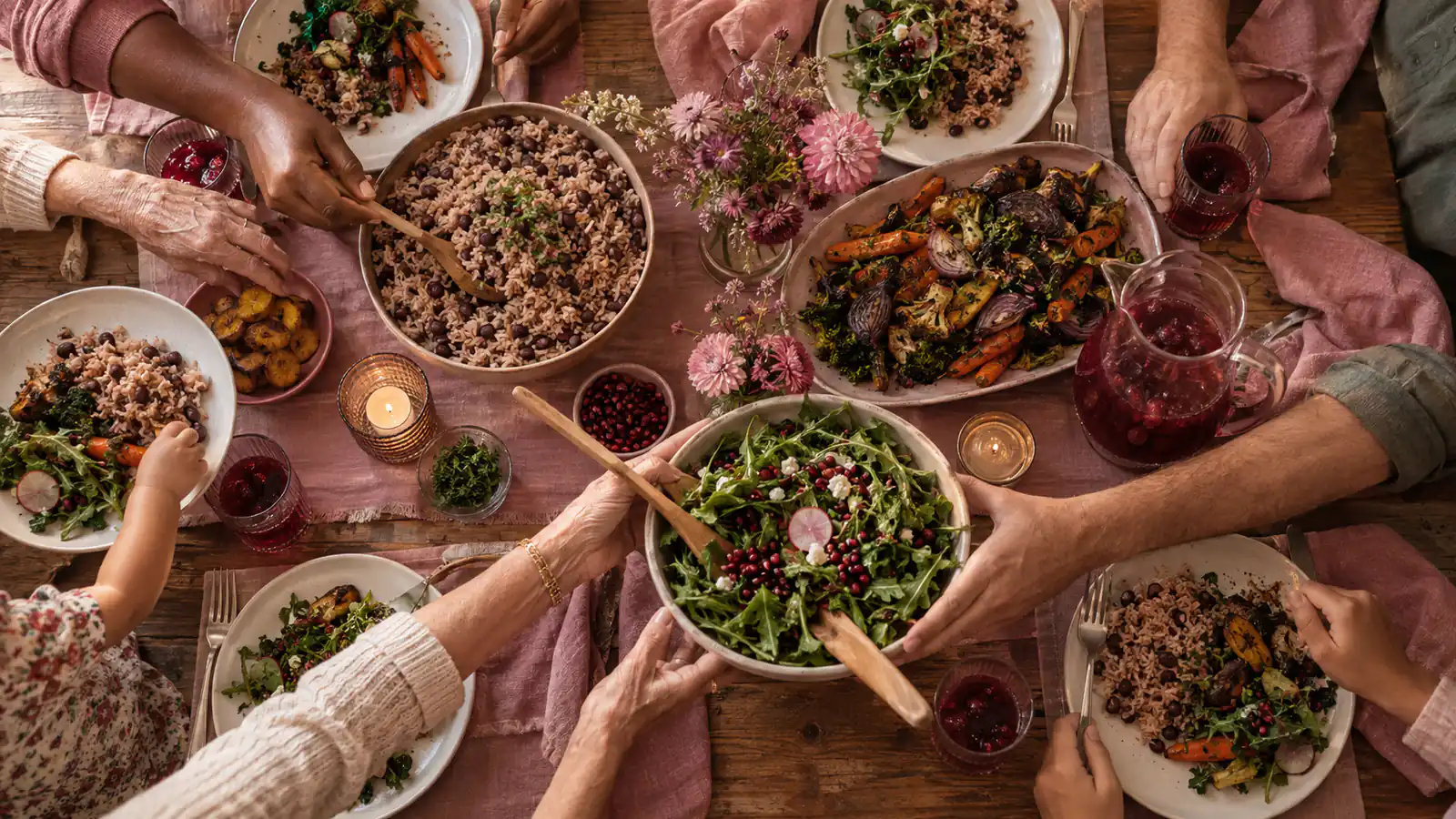
The best questions for family dinners are specific, a bit playful, or ask for a story. Here are 50 of them, all written fresh for this page, and most work for mixed ages.
Ask a table full of family “how was your day?” and you’ll get a chorus of “fine”. It isn’t that nobody has anything to say. That question is just too big and too familiar.
So pick one or two a meal, let everyone answer, grown-ups included, and see where the conversation goes.
Which questions for which table
Ten questions in each group.
- 1 to 10All agesSimple enough for young children, still fun for adults.
- 11 to 20Family storiesAim these at parents, aunties, uncles and grandparents.
- 21 to 30SillyFor tired or grumpy nights.
- 31 to 40ThinkingFor older kids and teens.
- 41 to 50The weekGood for a weekly family dinner.
Questions for family dinners that work for all ages
These are simple enough for young children and still fun for adults. Start here if you’re just getting the habit going.
- What was the best part of today, even if it was tiny?
- Who made you laugh today, and what did they do?
- If you could have any animal as a pet for one week, what would you choose?
- What’s something new you learned this week?
- If you could eat only one colour of food for a day, which colour?
- What would you name a new planet?
- Which room in our home is your favourite, and why?
- What are you excited about for this weekend or next week?
- If you could have any job for just one day, what would it be?
- What’s the kindest thing you saw someone do this week?
Questions that bring out family stories
Now turn the questions round. Aim these at parents, aunties, uncles and especially grandparents. The answers turn into family history, and children love hearing that the grown-ups were once kids too.
- What games did you play outside when you were my age?
- What was your very first job, and what did you spend the money on?
- What was your walk to school like when you were my age?
- What did a normal Sunday look like when you were young?
- Who was the funniest person in the family when you were little?
- What trouble did you get into as a child that you can laugh about now?
- What food reminds you most of your childhood?
- How did you and your partner meet? Tell the real version.
- Which family tradition started with your parents or grandparents?
- What’s the best advice an older relative ever gave you?
Silly table questions
Some nights everyone’s tired or grumpy, and a story is too much to ask. That’s when a silly question helps, because a good laugh is one of the fastest ways back to each other.
- If our family were a band, what would we be called, and who plays what?
- If you could swap lives with the family pet, or any animal, for a day, what would you do?
- If you could make one household chore disappear forever, which would it be?
- If dinner could be any food in the world tonight, what would it be?
- Which vegetable would win in a race?
- If you could shrink to the size of a mouse for an hour, where would you go?
- If our home could talk, what secret would it tell about us?
- What would you invent to make mornings easier?
- If you had a robot helper, what’s the first thing you’d make it do?
- Who at this table would win a talent show, and with what?
Thinking questions for older kids and teens
Teenagers often go quiet at the table, but plenty of them enjoy being asked real questions and taken seriously. Share your own answer, listen without lecturing, and let them disagree with you.
- What do adults usually get wrong about people your age?
- If you could change one rule at school, what would it be?
- What is a skill you wish school taught?
- Who is someone you admire who is not famous?
- What’s an opinion you used to have that you’ve since dropped?
- If you could solve one problem in the world, which would you choose?
- How can you tell when a friend really cares about you?
- What is a song, show, or game you think the rest of us should try?
- Where would you like to live when you’re grown up, and why there?
- What’s something you’re proud of that we might not know about?
Questions about the week and each other
These suit a weekly family dinner, like Sunday lunch or a Friday takeaway. Over time they build a gentle habit of noticing the good things, and each other.
- What was the high point and the low point of your week?
- What did someone at this table do this week that you appreciated?
- What was hard this week that you got through anyway?
- Is there anything you need a bit of help with next week?
- What made you laugh the hardest this week?
- What should we do together as a family this weekend?
- What’s one thing you’re grateful for that you usually forget about?
- What new thing would you like to try before the month is over?
- If this week had a title like a book, what would it be?
- What small thing would make next week better for you?
From JPott Studios
One calm email a month
One useful tip, one free printable or tool, and a short note from our apps. Join and get the free welcome pack: printable trackers, a packing list maker and more.
How do you make family dinner questions a habit?
The questions are the easy part. Keeping it going week after week takes a little ritual.
- Keep a question jar. Write questions on slips of paper and let a different person pull one out each night. Children love being the one who picks.
- Everyone answers, adults included. When parents and grandparents answer honestly, kids can see it’s a real conversation and not a quiz.
- Pass is always allowed. With no pressure, people join in more happily next time.
- Put phones away for the meal. Even twenty minutes of full attention makes a difference.
- Let the kids write questions too. Theirs are often the best ones.
- Keep the good answers. Jot the funny or touching replies in a notebook. In a few years, reading them back will be a treat.
How a question jar works
A small ritual that makes the habit easy to keep.
- Write questions on slipsLet the kids write some too.
- A different person picksChildren love being the one who picks.
- Everyone answersGrown-ups included.
- Pass is always allowedNo pressure means more people join in next time.
Family tables aren’t always easy. If a topic tends to start arguments, it’s fine to keep things light for a while. You’re there to connect, not to get to the bottom of everything over one meal.
Where Our Little Thing fits
Family conversation doesn’t have to stop when people live apart. When you set up Our Little Thing, you can choose Family. It’s made for two people, like a parent and a grown-up child or two siblings, and it’s worded for family with no romance. Each day there’s one question. You each answer on your own, and both answers are revealed together once you’ve both replied.
The Family option has two free question packs: Everyday and Play. Premium adds Family Stories, Memories, Support and Gratitude.
Want a fresh one for tonight’s table instead? Our free question of the day has a new one every day.
For the friends who feel like family, try these 60 questions to ask your best friend. You can add some fun to the table with our would you rather questions, and for the grown-ups, there are 100 questions to ask your partner once the kids are in bed.
Questions people ask
How do you get kids to talk at dinner?
Ask specific, playful questions instead of “how was your day?”. Let the adults answer too, keep it to one or two questions a meal, and never force an answer. Kids open up more when it feels like a game, not a test.
What are good questions for a family dinner with grandparents?
Questions that invite stories: what their first job was like, what they did for fun at your age, how they met, or what a normal day looked like when they were young. Older relatives often love being asked, and the answers become family history.
How often should we use conversation questions?
Whatever suits your family. Some do one question every night, others keep it for a weekly dinner. A regular slot, like Sunday dinner, makes it easier to remember.
What if someone doesn’t want to answer?
Let them pass, with no comment. A simple family rule that anyone can say “pass” makes everyone more willing to join in next time.
From JPott Studios
One calm email a month
One useful tip, one free printable or tool, and a short note from our apps. Join and get the free welcome pack: printable trackers, a packing list maker and more.